
When it comes to caring for aging parents, the choices we make today shape their tomorrow. For decades, families have relied on traditional care models—nursing homes, assisted living facilities, and standardized routines. But there’s a quiet revolution happening in senior care, one that puts your loved one at the center of every decision. Personalized senior care vs traditional models isn’t just a debate about logistics; it’s about reimagining what the golden years can truly be.
Personalized senior care, often called person-centered care, starts with a simple but profound question: What matters most to this individual? Instead of fitting your parent into a predetermined schedule or care plan, this approach builds everything around their unique goals, values, and preferences. It treats seniors as whole people with rich histories, evolving interests, and meaningful relationships—not just a collection of medical conditions that need managing.
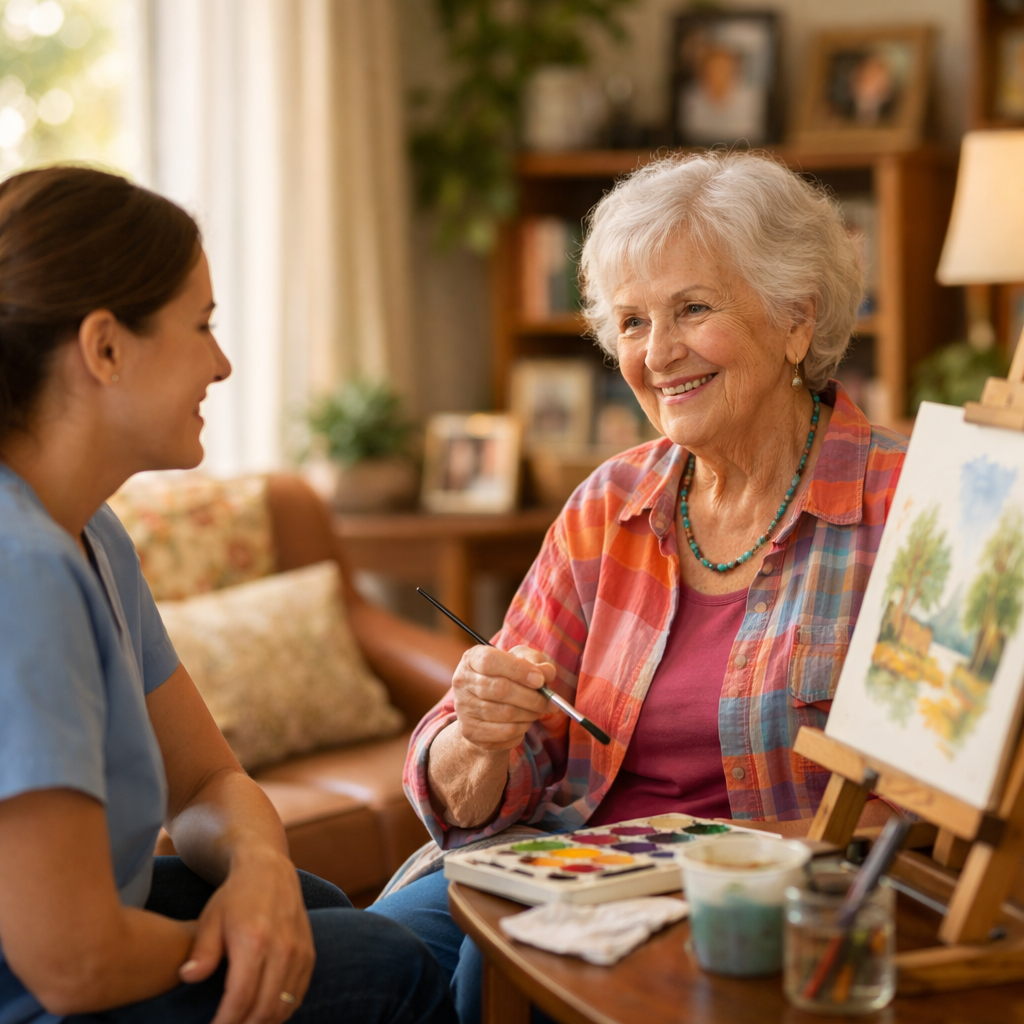
Think about it this way: traditional care might ensure your mom takes her medications on time and gets three meals a day. Personalized care asks what time she prefers breakfast, whether she’d rather paint in the morning or afternoon, and how to help her maintain the hobbies that bring her joy. It’s the difference between being cared for and truly living well.
Understanding the Core Differences in Care Priorities
The heart of personalized senior care vs traditional models lies in what each approach values most. Traditional care models prioritize safety, medical management, and efficiency. There’s nothing inherently wrong with these priorities—they matter tremendously. Facilities run on schedules: breakfast at 7 AM, activities at 10 AM, lunch at noon. Medications are dispensed like clockwork. Staffing ratios are calculated to ensure basic needs are met across many residents.
Personalized care flips this equation. It starts with autonomy—your parent’s right to make choices about their own life. What time do they want to wake up? Do they prefer a shower in the morning or evening? Would they rather spend time gardening or learning to play chess? These aren’t trivial questions. Studies show that seniors receiving person-centered care experience 25% fewer hospital admissions and report significantly higher satisfaction with their daily lives.
Dignity sits at the core of personalized approaches. Instead of being one of many residents following facility rules, your parent becomes the architect of their own days. One family shared how their father, a retired teacher, struggled in a traditional facility where he felt invisible. When they switched to personalized home care, his caregivers learned about his passion for literature and began reading classic novels with him each afternoon. His depression lifted. He started writing again. That’s the power of seeing someone as a complete person.
Traditional models often focus on what seniors can’t do anymore. Personalized care asks what they can still do—and what new things they might want to try. This shift from deficit-focused to strength-based thinking changes everything about the care experience.
How Care Settings and Delivery Methods Differ
Where and how care happens varies dramatically between personalized and traditional approaches. Traditional care typically unfolds in facilities—nursing homes or assisted living communities where professional staff provides around-the-clock oversight. You know your parent will have immediate access to medical support if something goes wrong. There’s a dining room, scheduled activities, and other residents for potential socialization.
Personalized senior care often centers on the home. Your parent stays in familiar surroundings, surrounded by decades of memories, favorite furniture, and the routines they’ve built over a lifetime. Caregivers come to them, providing one-on-one attention tailored to individual needs and preferences. The staff-to-client ratio isn’t 10:1 or 20:1—it’s truly 1:1.
Family engagement looks different too. In traditional settings, families often become visitors, stopping by during designated hours. Personalized care actively weaves family members into the care plan. Maybe your sister video calls during morning coffee. Perhaps grandchildren visit after school without navigating facility restrictions. One daughter described how personalized care allowed her to cook Sunday dinner with her mother again—something impossible in their previous assisted living arrangement.
This home-based approach isn’t just about physical location. It’s about maintaining connection to community. Your dad can still attend his weekly poker game at the community center. Your mom can keep volunteering at the library. These connections to the outside world—often severed in traditional facilities—keep seniors engaged, purposeful, and mentally sharp.
Of course, home-based personalized care requires coordination. Families work with care managers to schedule caregivers, arrange medical appointments, and ensure everything runs smoothly. It demands more involvement than simply enrolling someone in a facility. But for many families, this active participation feels meaningful rather than burdensome.
The Impact on Outcomes: Independence, Comfort, and Quality of Life
Let’s talk about what really matters: how each approach affects your parent’s daily experience and overall well-being. The data tells a compelling story about personalized senior care vs traditional models.
Independence flourishes under personalized care. When your mother can decide what to wear, when to eat, and how to spend her afternoon, she maintains agency over her life. Traditional facilities, by their nature, require standardization. Everyone needs to be dressed by breakfast time. Activities happen when they’re scheduled. This necessary structure can inadvertently strip away the small choices that make life feel like our own.
Research shows that seniors in person-centered care environments experience less stress and maintain higher levels of independence longer. They’re active participants in decisions about their care, not passive recipients. One study found that individuals receiving personalized care report feeling more connected to their surroundings and experience significantly better emotional well-being.
For seniors with complex conditions like dementia, personalized care plans can be transformative. Person-centered dementia care creates safe environments for wandering, incorporates life story work to maintain identity, and focuses on emotional connection rather than just behavior management. Traditional memory care units, while structured and secure, may rely more heavily on routines and restrictions.
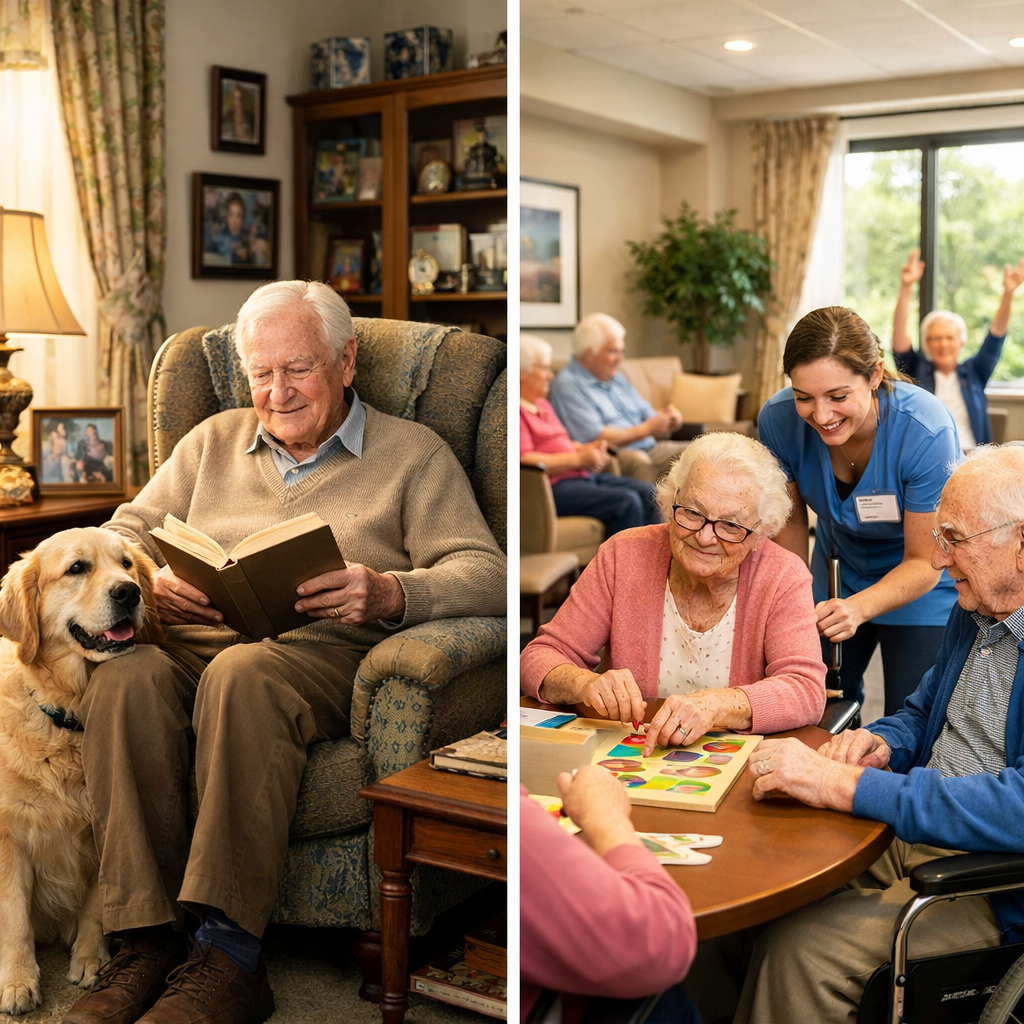
Comfort means different things to different people. For some seniors, comfort is the security of knowing medical professionals are always nearby. Traditional facilities excel here—if your parent has unstable health conditions requiring frequent monitoring, 24/7 professional oversight provides genuine peace of mind. But for healthier seniors, comfort might mean staying in their own bed, using their own bathroom, and having their dog curl up beside them while they read.
The social element cuts both ways. Traditional facilities offer built-in opportunities for interaction with other residents. Your parent might make new friends, join group activities, and never eat a meal alone. But the quality of these interactions varies. Some seniors thrive in communal settings; others feel isolated despite being surrounded by people. Personalized home care can feel lonely without intentional effort to maintain social connections—but it also protects against unwanted interactions and institutional living.
Practical Considerations for Choosing the Right Approach
Making the decision between personalized senior care vs traditional models requires honest assessment of several factors. Start with safety. Does your parent have fall risk? Are there cognitive issues that could lead to dangerous situations? Traditional facilities provide immediate response to emergencies and environmental modifications designed for safety. Home-based care can incorporate safety features and monitoring technology, but family members need to evaluate whether the home environment can be made adequately safe.
Medical needs matter tremendously. If your parent requires complex medical interventions, frequent nursing assessments, or immediate access to healthcare professionals, traditional skilled nursing facilities might be essential. However, many seniors with chronic conditions manage perfectly well with personalized home care that coordinates with physicians, home health nurses, and specialized therapists.
Let’s address the elephant in the room: cost. The financial picture is complicated. Traditional assisted living facilities in the United States average $4,000-$6,000 monthly, with skilled nursing care significantly higher. Personalized home care costs vary based on hours needed and level of service, ranging from part-time assistance to 24/7 live-in care. Neither option is cheap, but home care can be more cost-effective for seniors who don’t need round-the-clock supervision.
Customization potential is where personalized care truly shines. Can your parent’s care adapt as their needs change? With personalized approaches, adjusting care hours, adding services, or shifting focus happens relatively easily. Traditional facilities have set programming—you’re working within their existing structure rather than building a plan from scratch.
Consider your parent’s personality and preferences. Would your father thrive with the structure and social opportunities of a facility? Or would he feel constrained and unhappy? Does your mother cherish her independence and familiar surroundings above all else? Or would she appreciate the security and companionship of communal living?
Family capacity plays a role too. Personalized home care often requires more family involvement in coordination and decision-making. Do you live nearby? Can siblings share responsibilities? Are you able to be an active participant in care management? Some families find this involvement meaningful; others feel overwhelmed by the logistics.
Clearing Up Common Misconceptions
Let’s dispel some myths about personalized senior care vs traditional models. First, the idea that personalized care means going it alone. Quality personalized care involves care managers, professional caregivers, and coordination with healthcare providers. You’re not figuring everything out yourself—you’re working with a team that adapts to your parent’s needs.
Another misconception: traditional facilities are one-size-fits-all institutions with no personalization. Many modern assisted living communities incorporate person-centered principles, offering flexible dining times, customized activity plans, and resident input into daily life. The best facilities are moving toward more individualized approaches within their structured settings.
Some families worry that home-based care means their loved one will be isolated. With intentional planning—maintaining community connections, arranging social activities, leveraging technology for virtual engagement—personalized care can be deeply social. The key is building this into the care plan rather than assuming it will happen automatically.
There’s also a false dichotomy here. Personalized senior care vs traditional models isn’t always an either/or choice. Hybrid approaches combine the best of both worlds. Your parent might live independently at home with personalized daytime care while also participating in a senior center’s programming. Or they might reside in an assisted living facility but work with staff to create highly customized daily routines.
The most important misconception to address: that choosing one approach means giving up on the other forever. Care needs evolve. Your parent might thrive with personalized home care for years, then transition to a facility as medical needs intensify. Or they might start in assisted living and return home with enhanced support services. Flexibility and willingness to reassess make all the difference.
Your Parent’s Golden Years, Your Family’s Choice
Here’s the quick takeaway: the right care approach depends entirely on your loved one’s unique needs, values, and circumstances. Personalized senior care offers autonomy, familiar surroundings, and truly individualized attention. Traditional models provide structure, immediate medical access, and built-in socialization. Neither is universally “better”—each serves different seniors well.
The families who make the best decisions are those who start with what matters most to their parents. What brings your mother joy? What would help your father feel purposeful? What trade-offs is your family willing to make? Answer these questions honestly, and the path forward often becomes clearer.
At SilverSmart, we believe retirement should be a journey of continuous discovery, exploration, and thriving. Whether your parent receives care at home or in a facility, what matters is that their golden years reflect their values, interests, and aspirations. The future of senior care isn’t about choosing between rigid categories—it’s about leveraging technology, personalization, and human connection to create experiences tailored to each individual.
Your parent spent decades making choices, pursuing passions, and building a life that reflected who they are. Their care should honor that journey by putting them at the center of every decision. Because when we reimagine care around the person rather than the system, remarkable things become possible—at any age.