
Retirement opens up a world of possibilities, and staying active and engaged is key to making the most of these golden years. For seniors with limited mobility, the idea of staying physically and mentally stimulated might seem challenging at first. But here’s the wonderful truth: your living room can become a vibrant hub of discovery, creativity, and joy. Indoor activities offer just as much fulfillment as outdoor pursuits, keeping both mind and body healthy while respecting your comfort and safety.
The beauty of indoor activities is that they meet you where you are. Whether you’re recovering from an injury, managing a chronic condition, or simply preferring the comfort of home, there’s a rich tapestry of engaging pursuits waiting to be explored. These activities don’t just pass the time—they stimulate cognitive function, maintain physical wellness, foster creativity, and create meaningful connections with others. Let’s explore the wonderful world of indoor activities for seniors with limited mobility that can transform everyday moments into opportunities for growth and happiness.
Moving with Gentle Purpose: Physical Activities That Respect Your Body
Just because mobility is limited doesn’t mean movement stops. In fact, gentle physical activity becomes even more important for maintaining flexibility, circulation, and overall well-being. Chair yoga has emerged as a favorite among seniors because it adapts traditional yoga poses to be performed while seated or using a chair for support. This practice improves flexibility, strengthens muscles, and promotes better breathing—all without the risk of losing balance or overexertion.
Many seniors discover that even 15 minutes of gentle stretching in the morning sets a positive tone for the entire day. You might start with simple neck rolls, shoulder shrugs, and ankle circles while seated comfortably in your favorite chair. These movements keep joints mobile and reduce stiffness that often accompanies limited activity.
Walking, even in short bursts around your home, supports heart health and maintains circulation. If you have a hallway or a clear path through your living room, consider taking several short walks throughout the day. Even five-minute intervals add up, helping with balance, energy levels, and mood. For those using walkers or other mobility aids, these indoor paths provide a safe environment to stay moving.
Unleashing Your Creative Spirit: Arts and Crafts That Spark Joy
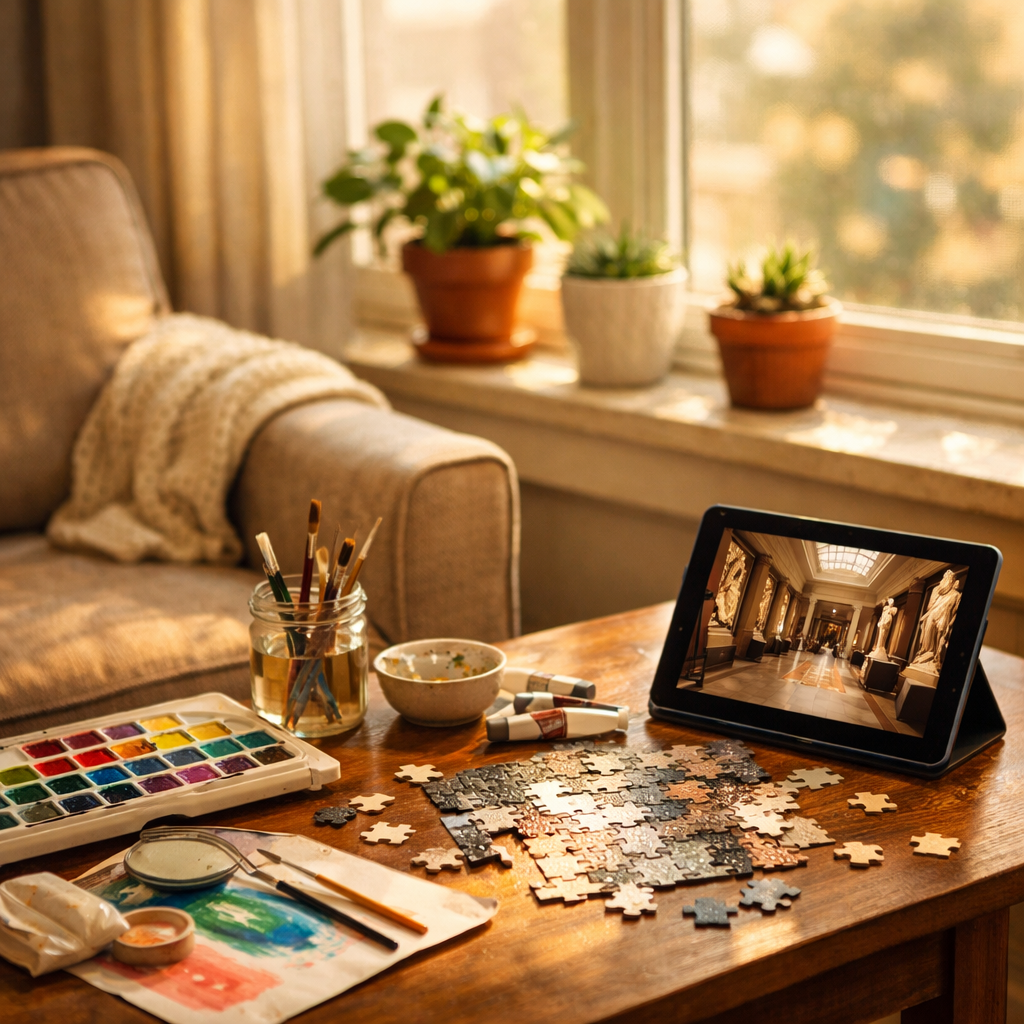
Creativity knows no physical boundaries. Painting, drawing, and crafts offer wonderful outlets for self-expression while keeping your hands and mind active. You don’t need to be a professional artist to enjoy the therapeutic benefits of creating something beautiful. Watercolor painting is particularly forgiving and relaxing—the way colors blend and flow on paper creates happy accidents that often become the most interesting parts of your artwork.
Knitting and crocheting have experienced a wonderful resurgence, and for good reason. These activities provide rhythmic, meditative movement that many find deeply calming. Plus, you’ll create useful items like scarves, blankets, or hats that make meaningful gifts for loved ones. The repetitive motions can actually help with hand strength and dexterity.
Scrapbooking and photo organizing offer a beautiful way to preserve memories while staying creatively engaged. Gathering old photographs, arranging them in albums, and adding captions brings back cherished moments and creates a legacy for future generations. This activity combines creativity, memory stimulation, and storytelling—a triple benefit for cognitive health.
For those interested in three-dimensional crafts, clay modeling or polymer clay work can be done comfortably at a table. Creating small sculptures, decorative items, or even jewelry provides tactile stimulation and a sense of accomplishment when you see your finished pieces.
Sharpening the Mind: Cognitive Games and Learning Adventures
Keeping your mind sharp is just as important as physical activity, and cognitive games provide the perfect combination of fun and mental exercise. Puzzles come in all varieties—jigsaw puzzles, crosswords, Sudoku, and word searches each challenge different aspects of cognitive function. Jigsaw puzzles, in particular, engage visual-spatial reasoning and can be worked on gradually over days or weeks, providing an ongoing project that’s always waiting for you.
Board games aren’t just for game night anymore. Games like Scrabble, chess, or even solitaire card games provide excellent brain workouts. If you have a partner or family members who visit, games become social activities that strengthen connections while keeping minds active.
Storytelling and writing offer profound cognitive benefits. Whether you’re penning your memoirs, writing letters to grandchildren, or simply journaling about your day, the act of organizing thoughts into words exercises memory, creativity, and communication skills. Many seniors find that recording their life stories becomes a treasured gift for their families—a way to preserve wisdom, experiences, and family history.
Online learning has opened incredible doors for seniors interested in discovering new subjects. Platforms offering free courses on everything from history to art to science allow you to become a lifelong learner from your living room. The ability to pause, rewind, and learn at your own pace makes these resources perfect for seniors with limited mobility.
Finding Harmony: Music and Performance Activities
Music has a unique power to lift spirits, evoke memories, and create joy. Listening to your favorite songs from different eras of your life can be profoundly moving, bringing back vivid memories and positive emotions. Creating playlists for different moods—energizing morning music, relaxing afternoon melodies, or nostalgic evening tunes—gives you control over your emotional environment.
For those musically inclined, learning to play an instrument or brushing up on skills from younger years provides wonderful mental stimulation. The piano and keyboard are particularly accessible for seniors with limited mobility since they can be played while seated. Even simple instruments like harmonicas or small percussion instruments can bring musical joy into your daily routine.
Singing, whether solo or along with recordings, exercises your lungs, improves breathing, and releases endorphins that boost mood. Don’t worry about perfect pitch—singing is about expression and joy, not performance. Many seniors discover virtual choir groups or singing sessions online where they can harmonize with others from the comfort of home.
Bringing Nature Indoors: Gardening and Natural Hobbies
You don’t need a backyard to enjoy the therapeutic benefits of gardening. Indoor gardening and plant care offer a wonderful connection to the natural world while respecting mobility limitations. Potted herbs on a sunny windowsill provide fresh ingredients for cooking and the satisfaction of nurturing living things. Watching basil, mint, or parsley grow from tiny seedlings to harvestable plants creates a rewarding cycle of care and enjoyment.
Raised garden beds or tabletop gardens bring plants to comfortable working heights, eliminating the need for bending or kneeling. Succulents and low-maintenance houseplants are perfect for beginners, requiring minimal care while adding life and color to your living space. The act of watering, pruning, and tending plants provides gentle physical activity and a sense of purpose.

Birdwatching from your window can become a delightful daily ritual. Setting up a bird feeder outside your favorite window transforms it into a personal nature theater. Identifying different species, noting their behaviors, and tracking seasonal visitors engages observation skills and connects you with the rhythms of nature.
Mindfulness practices that incorporate nature—like guided meditations featuring forest sounds or ocean waves—bring natural serenity indoors. These practices enhance relaxation, reduce stress, and improve mental well-being. Even five minutes of focused breathing while visualizing peaceful natural settings can reset your mood and energy.
Embracing the Digital Age: Technology-Enabled Hobbies and Connections
Technology has revolutionized what’s possible for seniors with limited mobility, opening worlds of connection and discovery. Virtual tours of museums, national parks, and historical sites allow you to explore places you’ve always wanted to visit without leaving home. Many world-class institutions offer high-quality virtual experiences that include detailed explanations and close-up views you might not get in person.
Video calls with family and friends transform isolation into connection. Regular virtual coffee dates with grandchildren, weekly check-ins with old friends, or joining family celebrations remotely keeps relationships strong despite physical distance. The ability to see loved ones’ faces while chatting adds warmth that phone calls alone can’t provide.
Online classes and hobby groups create communities of like-minded people. Whether you’re interested in photography, cooking, book discussions, or learning a new language, virtual groups allow you to participate fully without transportation challenges. These regular scheduled activities provide structure and social interaction that enrich daily life.
Digital games and brain training apps specifically designed for seniors offer cognitive challenges in engaging formats. From Wordle to memory games to strategy puzzles, these activities keep minds sharp while providing the satisfaction of tracking progress and achieving new levels.
Creating Safe and Accessible Spaces for Activities
The key to enjoying indoor activities is setting up your environment for comfort and safety. Start by ensuring good lighting—adequate illumination reduces eye strain and prevents accidents. Position your activity areas near windows for natural light when possible, and use task lighting for detailed work.
Organize your supplies within easy reach. Store frequently used items at waist to shoulder height, eliminating the need for excessive bending or stretching. Clear pathways throughout your home ensure safe movement between activity areas, especially if you use mobility aids.
Comfortable seating makes extended activities more enjoyable. A supportive chair with good back support and armrests helps maintain proper posture during crafts, reading, or computer work. Consider adding cushions or ergonomic supports to optimize comfort.
Keep safety in mind with all activities. Use stable work surfaces that won’t tip, choose non-slip mats under rugs or activity areas, and keep emergency contacts easily accessible. These simple precautions allow you to focus on enjoyment rather than worry.
Personalizing Your Activity Routine
The most successful activity routines are those tailored to your unique interests, abilities, and energy levels. Start by reflecting on what brought you joy in the past—childhood hobbies, career-related skills, or activities you’ve always wanted to try. These natural interests provide the best foundation for engagement.
Create a balanced routine that includes different types of activities. Mix physical movement with creative pursuits, cognitive challenges with relaxation, and solo activities with social connections. This variety keeps days interesting and exercises different aspects of wellness.
Don’t hesitate to modify activities to suit your needs. If traditional crafts require too much fine motor control, explore larger-scale projects. If full yoga sessions feel overwhelming, start with just a few poses. The goal is engagement and joy, not perfection or comparison with others.
Involving family or friends enriches many activities. Invite grandchildren to video calls where you teach them a craft or share stories. Join online book clubs to discuss literature with peers. Cook the same recipe as a friend and compare results over the phone. These shared experiences create meaningful connections and make activities more enjoyable.
Discovering Your Path to Active, Joyful Aging
Indoor activities for seniors with limited mobility aren’t about limitations—they’re about possibilities. Every day offers opportunities to discover something new, create something beautiful, learn something fascinating, or connect with someone meaningful. The key is finding activities that resonate with your personal interests and adapting them to support your wellness and independence.
This philosophy of active aging through personalized experiences aligns perfectly with discovering new passions and thriving during retirement. Just as AI-powered solutions can tailor recommendations to individual needs and preferences, your activity choices should reflect your unique journey. Whether you’re exploring creative arts, engaging your mind with puzzles and learning, or connecting with loved ones through technology, each activity contributes to a vibrant, fulfilling retirement.
The beauty of indoor activities is their flexibility and accessibility. You control the pace, the intensity, and the direction of your explorations. Start with what excites you, be patient with yourself as you learn new skills, and celebrate every small accomplishment along the way. Your living room isn’t just a space—it’s a launchpad for discovery, a studio for creativity, a classroom for learning, and a gathering place for connection.
Remember, retirement is not a destination but a journey of continuous growth and discovery. By embracing indoor activities that challenge your mind, nurture your creativity, keep your body moving gently, and maintain your connections with others, you’re not just passing time—you’re crafting a rich, purposeful life filled with joy and meaning. Every puzzle solved, every stitch completed, every new song learned, and every conversation shared adds another layer to your golden years, proving that the best is yet to come, right here in the comfort of your own home.